
About
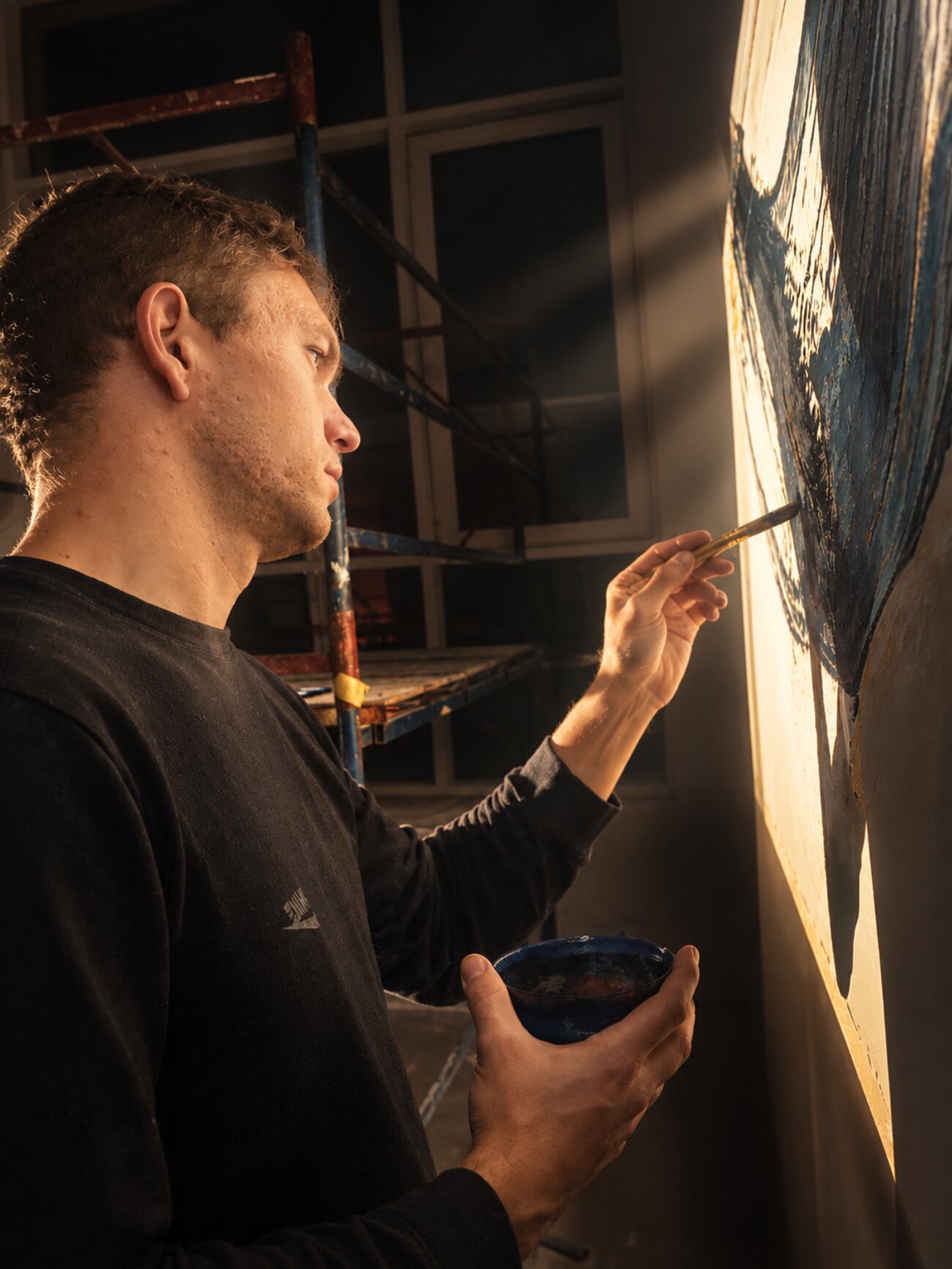
Daniel has spent fifteen years learning what materials will actually do — how plaster takes a line, how ink moves on a wall, how foam carves, how clay holds a shape. He grew up in a family of artists and has lived and worked across Europe, Asia and the United States, in mural, texture, clay and framed art.
Octopus Dream Art is his studio. Most walls he paints himself; on large jobs a small crew works alongside him. Every piece is made for one space, one client and one budget — drawn for the room before a drop of paint goes on it.
Every project starts with one question: why does this piece need to exist? What is the room for, what does the client actually want to feel standing in it, what is the dream behind the request. Daniel works that out first — along with the timing and the budget — and only then starts proposing what the art could be.
A piece can be deeply personal and still have a job to do. It has to suit the room's purpose, survive the light and the traffic and the weather, and sit right with everything already in the space. Fifteen years across seven materials means the idea comes first and the material is chosen to serve it — rather than the idea being cut down to whatever one medium can do.
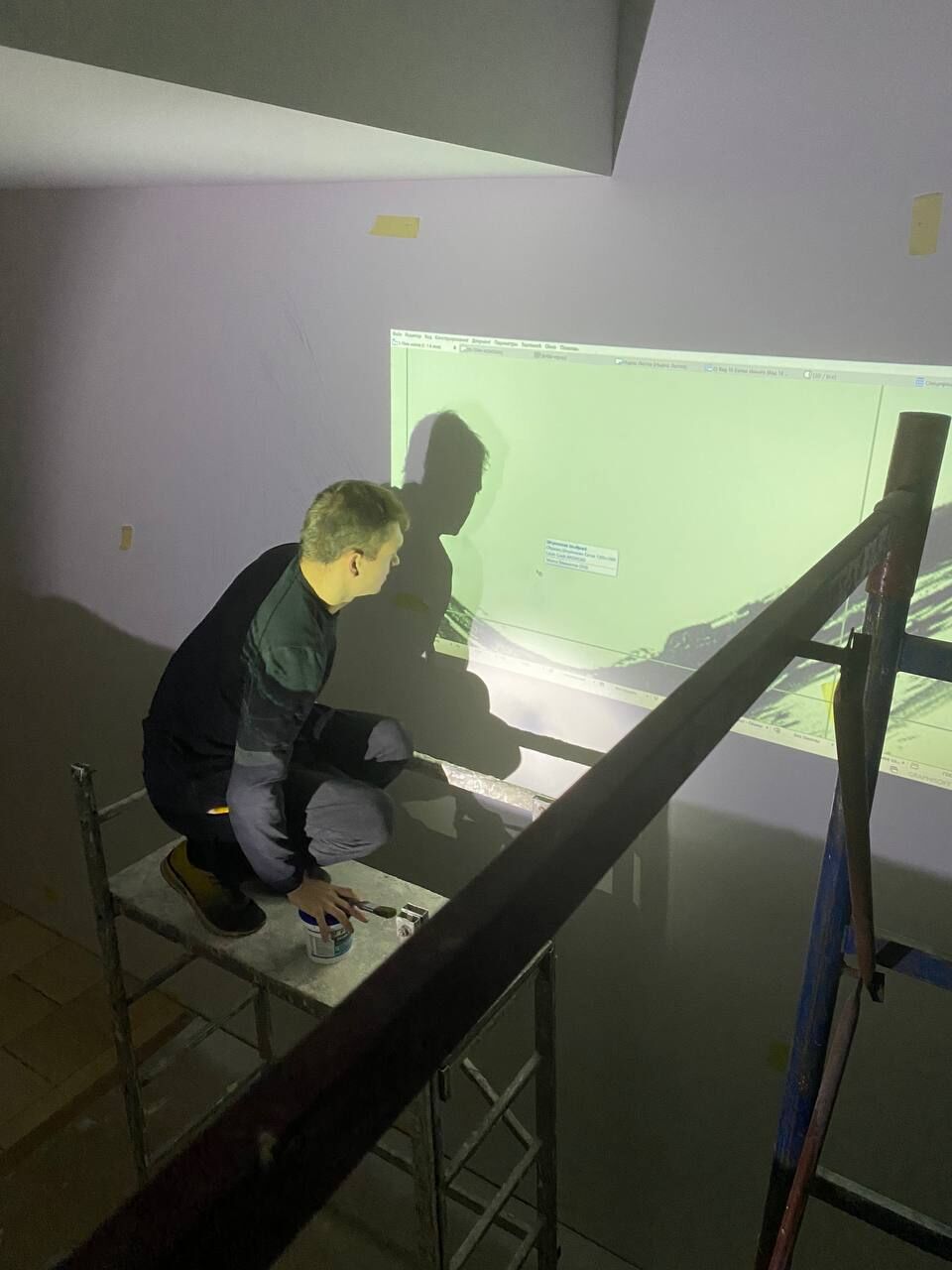
Once the direction is agreed, you get a visual of your actual wall — a sketch or a fully realistic render, whichever suits the project and makes the decision easiest for you. You see what you are going to get before anything is opened.
Nothing is painted until that is approved. That is what keeps the whole process calm instead of nerve-racking.
Every piece starts with why it needs to exist — not with a style picked off a shelf.
Unique doesn't mean impractical. The piece has to work in the room it lives in, every day.
Daniel knows when depth serves the work — and, just as importantly, when it doesn't.
Metal armature, ecological materials, finishes chosen for decades.
Not every piece is flat. Some are built out from the surface — sculpted relief, heavy impasto, layered texture you can read with your hand as much as your eye.
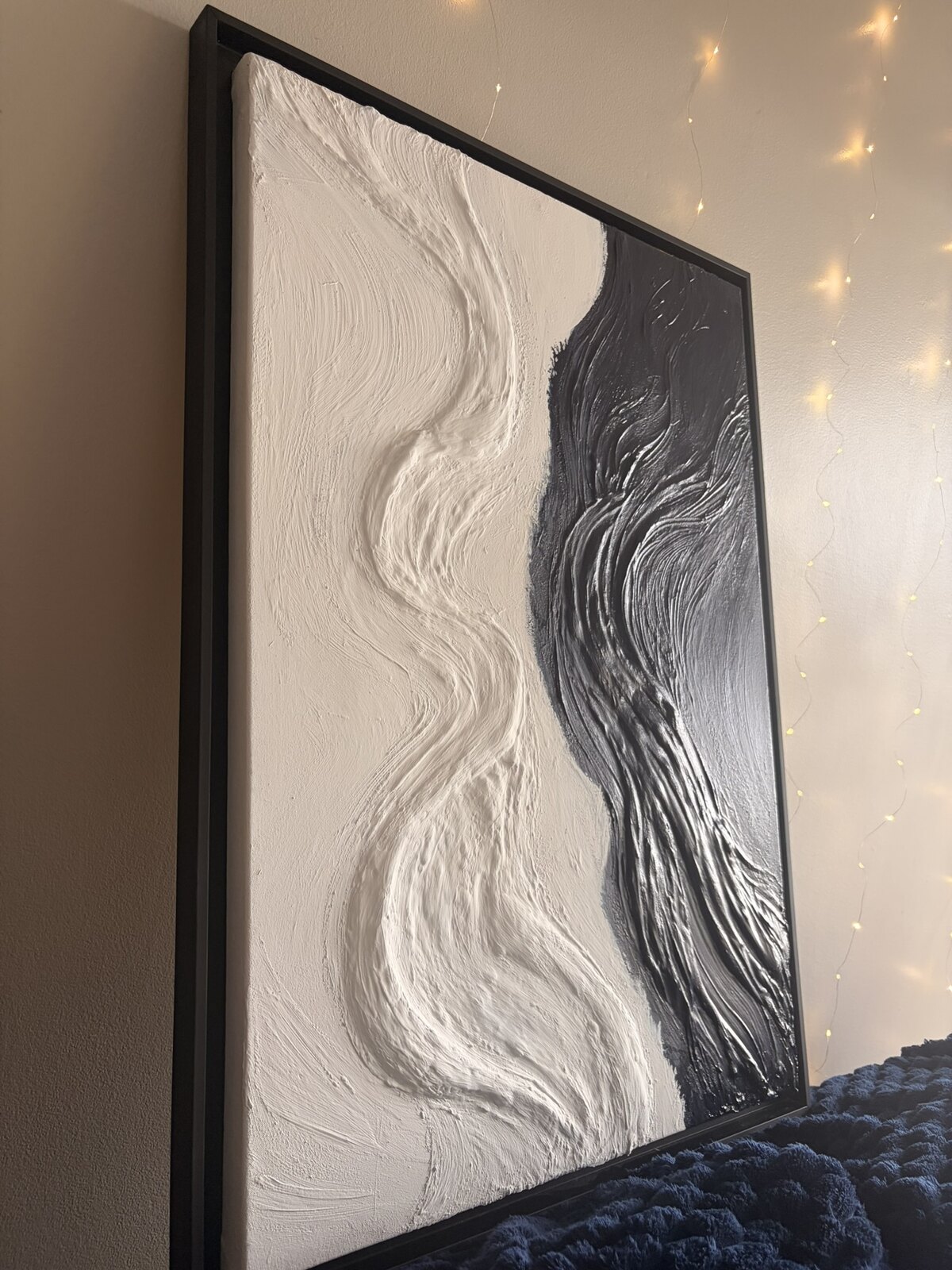
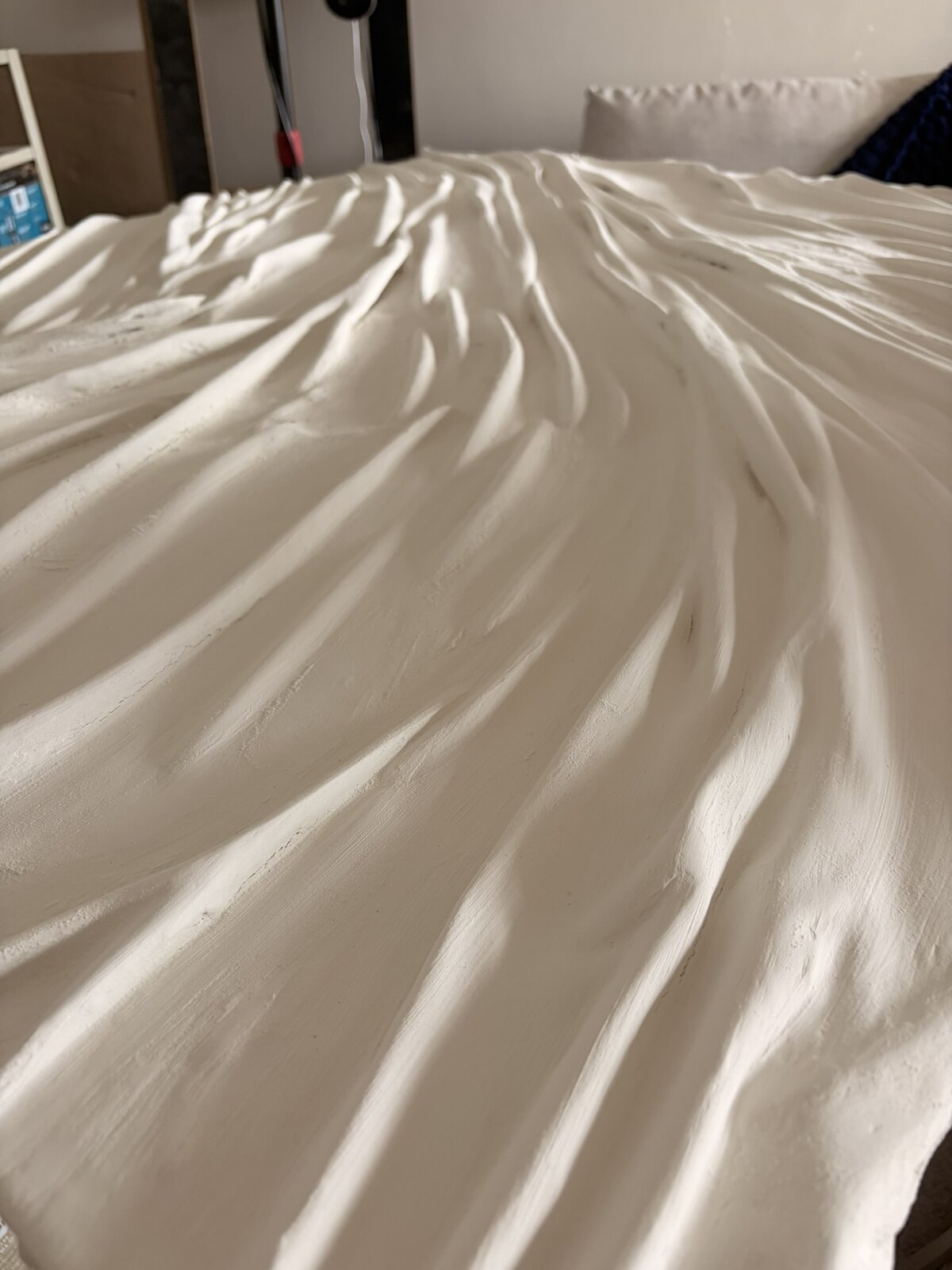
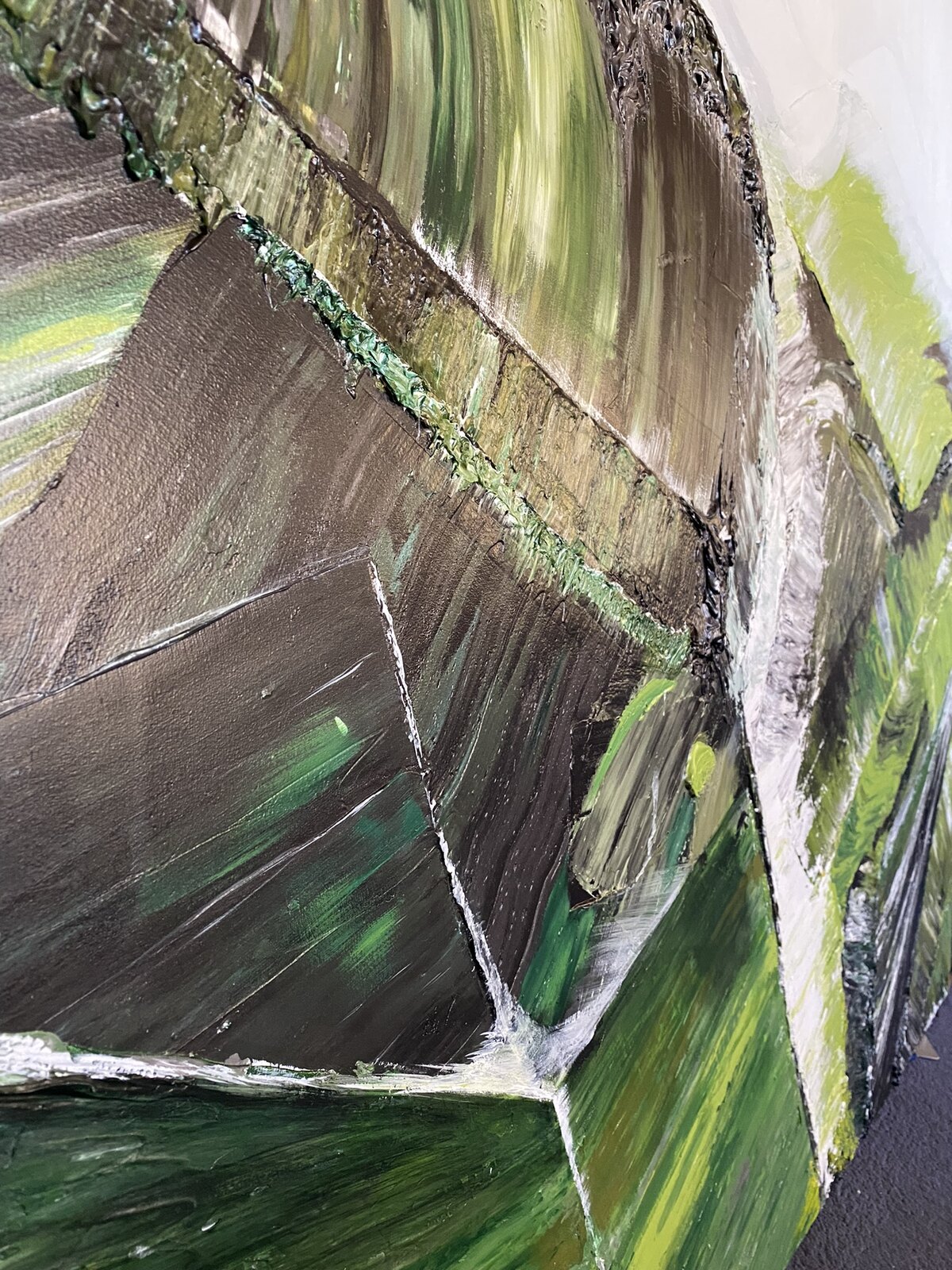
These are not plaster troweled onto a board. Dimensional pieces are built over a metal armature, in high-quality ecological materials chosen to hold their shape. They don't sag, crack or shift as they age. They are made to last decades, not seasons.
Most people arrive with a feeling rather than a picture. They know they want something good in that room — they couldn't tell you what.
Turning that into something specific is the part Daniel is best at. Clients see the visual and recognise the thing they couldn't describe.
What comes back afterwards is almost always the same: it is more beautiful than they pictured, and it holds more feeling than they expected from a wall. People with no background in art say it just as often as the ones who have one.
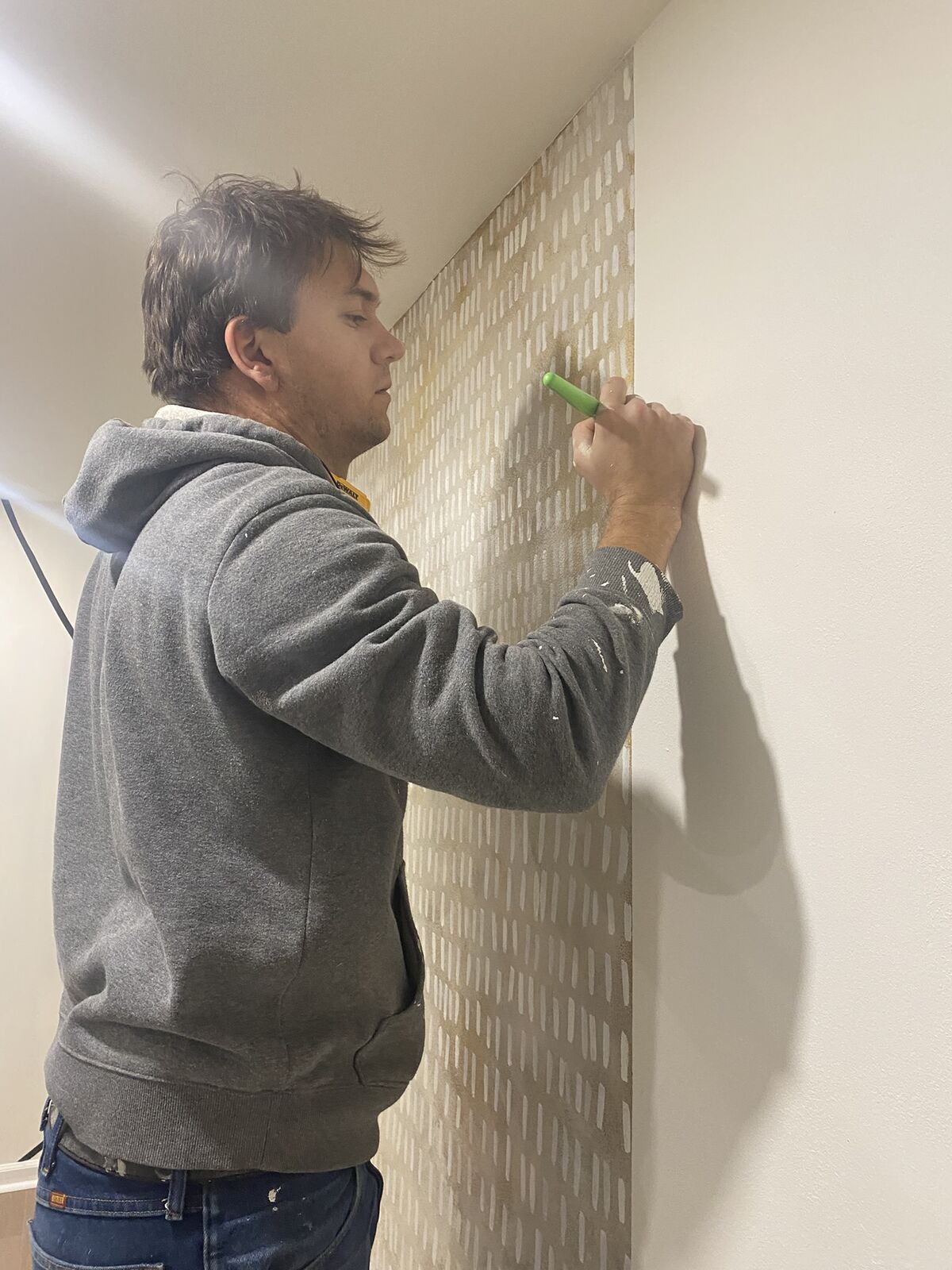
Ladders, scaffolding, long days and sheeted floors. Large walls are a physical job before they are an artistic one.
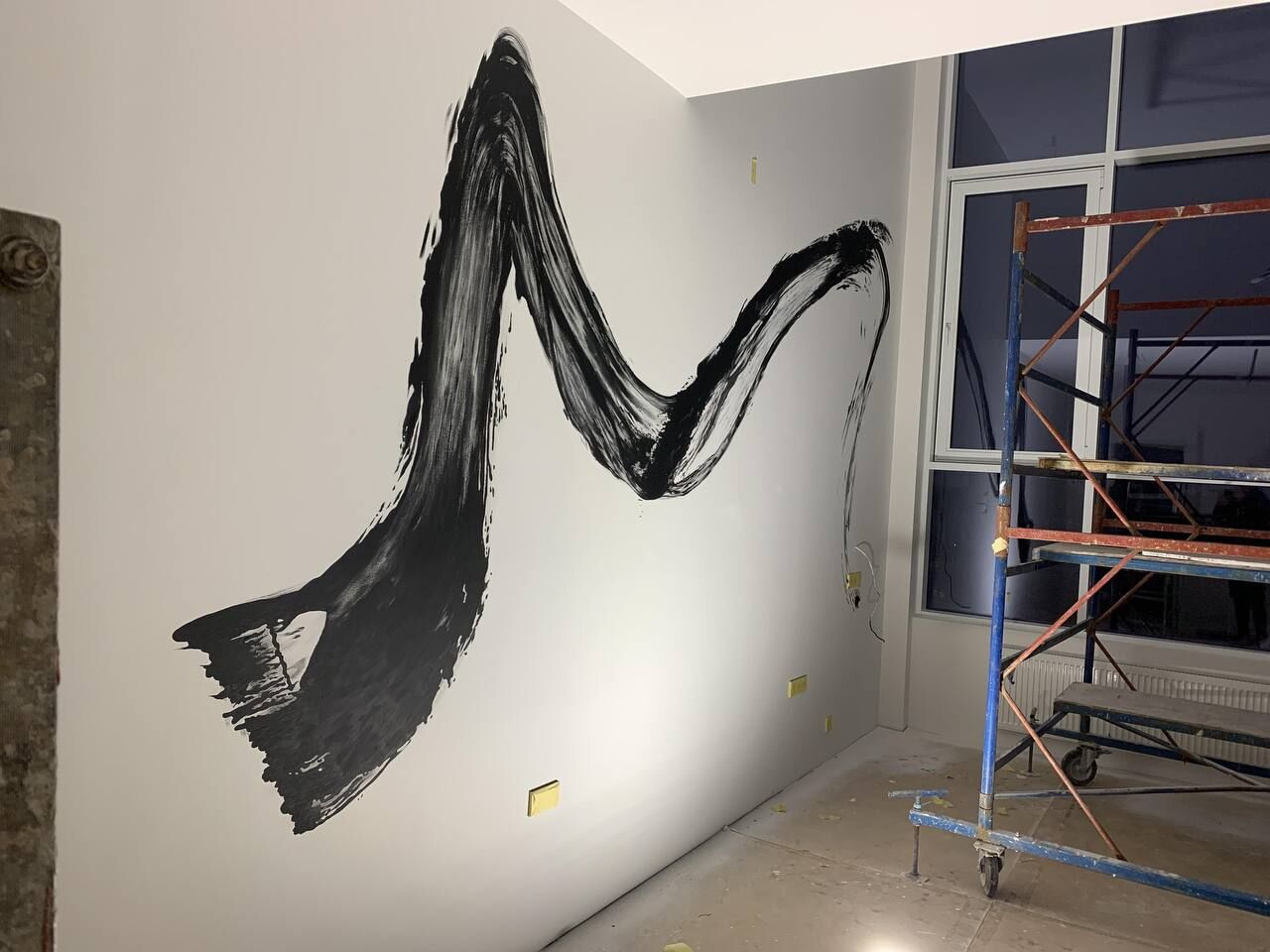
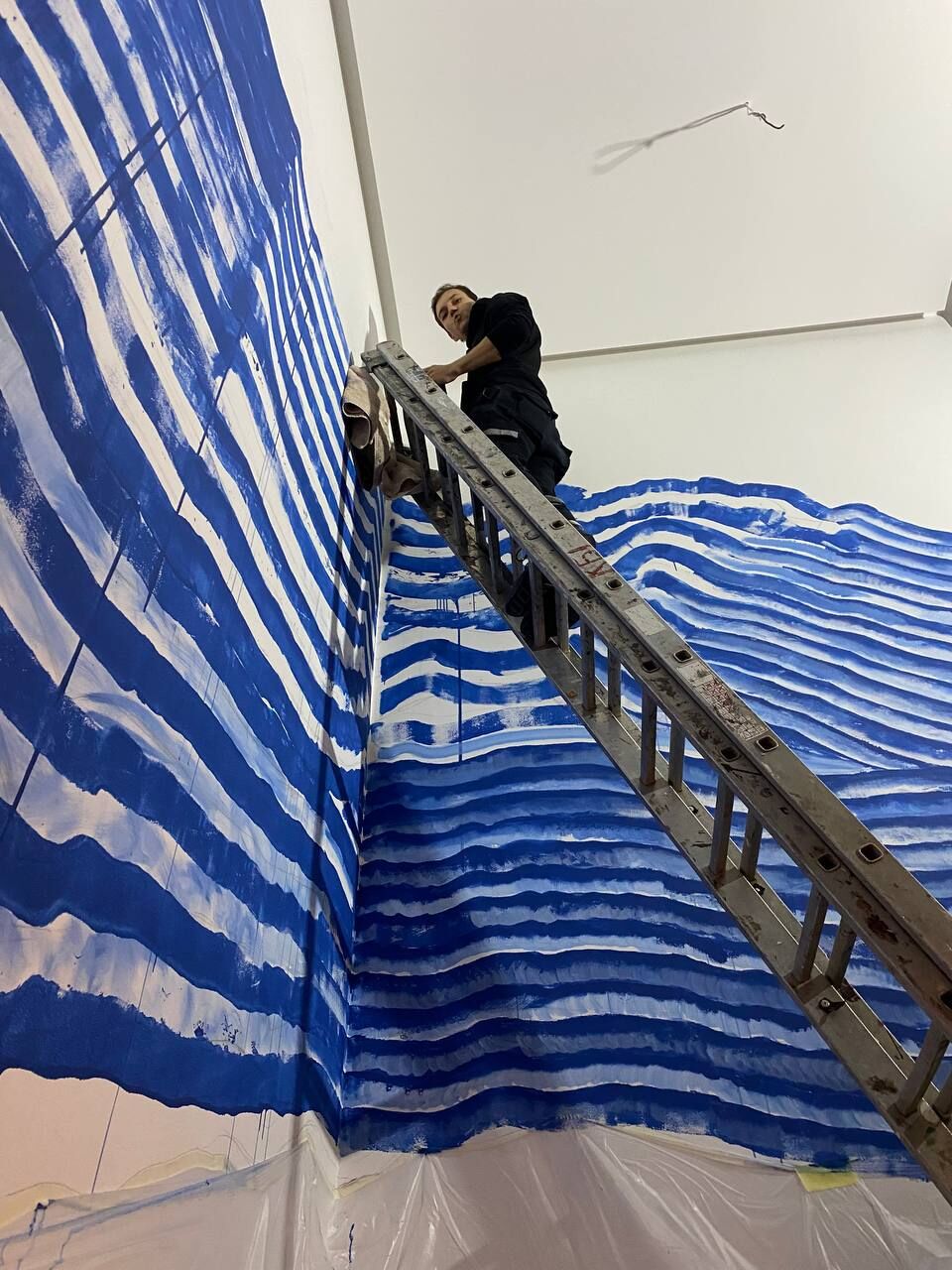
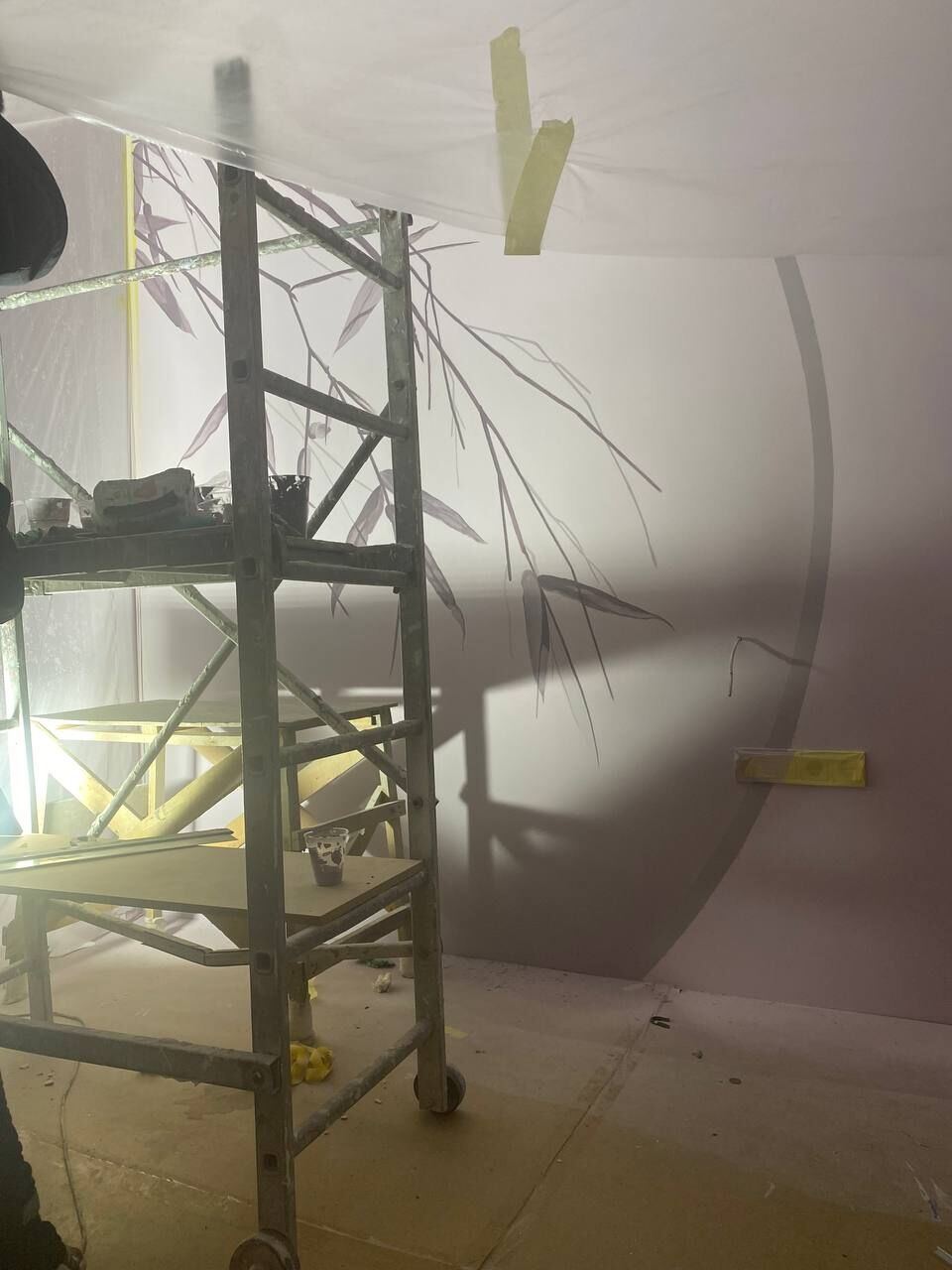
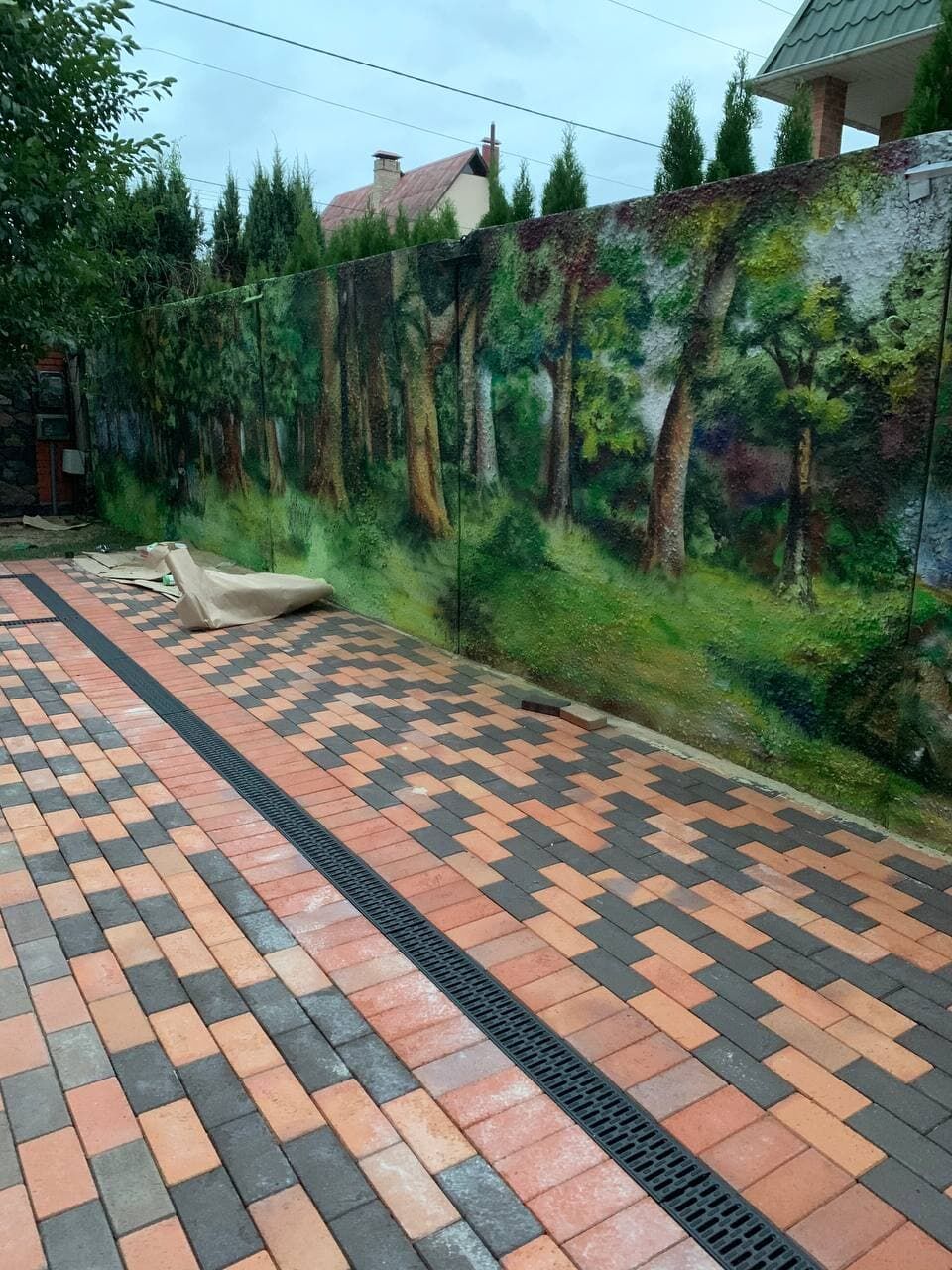
What Daniel takes on
A single framed piece, a panel, one feature area of a room.
A full wall — living room, bedroom, hallway.
A whole room wall to wall, or a stairwell running across two floors.
A house facade, a gable, a boundary fence the length of a garden.
Interiors. Living rooms, bedrooms, children's rooms, hallways and stairwells.
Exteriors. Facades, gables, pool walls and boundary fences, in paint built to take weather and sun.
Surfaces. Smooth plaster, rough render, concrete, masonry, canvas and panel — plus plaster built up and carved by hand where the surface itself is the piece.
Start with the room
Send photos of the space, rough dimensions and how it is used. The first consultation is free. You'll get questions back, then a visual made for your actual wall and a written price — no obligation at that stage.
Or write directly: hello@octopusdreamart.com